
Case Study: Bispebjerg Hospital
 Client – Bispebjerg Hospital
Author – Joe Maleczek
Hospital overview –
” Bispebjerg and Frederiksberg Hospital is one of the Capital Capital’s 4 acute hospitals. To us
it is about life, saving and improving life, creating a quality of life and an attractive working life. We have 4,200 employees serving over 455,000 citizens.
We have 530 beds, 80,000 emergency visits, and 400,000 outpatient visits a year. We build 85,000 new square meters and build 12,000 square meters to “New Hospital Bispebjerg”.
The hospital is a university hospital.”
https://www.bispebjerghospital.dk/
A Commitment to Create the Best Treatment – Bispebjerg Hospital is one of the many hospitals in Copenhagen, Denmark. Along with a number of other hospitals and the University of Copenhagen (the Faculty of Health Sciences), Bispebjerg Hospital forms part of the Copenhagen University Hospital.
It was built in 1913, and today it is the workplace for 3,000 staff. It is a large hospital with many different specialities, complex patient cases and serves an equally diversified group of patients.
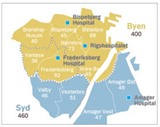
 The hospital serves as a community hospital for the inhabitants of a large part of Copenhagen and it functions as a modern city hospital for 400,000 citizens from the Municipality of Frederiksberg and the larger part of the Municipality of Copenhagen.
This, in turn, means that the hospital will have a larger catchment area, will be managing the shared emergency services, and is expected to be extended through an extensive new building. It also serves as a teaching hospital for the medical students of the University of Copenhagen.
Bispebjerg Hospital is situated on the hill, called Bispebjerg Bakke, and it is like a green oasis in a very cosmopolitan city. From the buildings, there is a fine view over the city and the unique green gardens, which were laid out in 1913 when the hospital was built. The hospital is constructed with the original pavilions and some newer buildings that are all connected underground through a large tunnel system.
Bispebjerg Hospital lives up to national and international standards for quality development and safety. The hospital is submitted for accreditation every three years. Their ARCHIBUS system is used to manage two sites Bispebjerg and Frederiksberg Hospitals, comprising 79 buildings and 300,000 sq. ft with 4,500 employees across both sites.
The current annual Facilities Management budget is 25M DK (approximately £2.7M).
The systems at the hospitals have been installed for just over one year and two months respectively.
The hardware platform used is the Lenovo T430 and networking is delivered through both cable and wireless.
ARCHIBUS software is version 20.1 moving to 22.1 presently, while CAD software is Revit from Autodesk.
The ARCHIBUS applications that they are currently using at the hospitals are:
- On Demand Help Desk
- Asset Management
- Move Management
- Mobile Framework and Apps
 Current plans are to start using the Space Management application later in the year.
Preben Lauridsen is the man driving the ARCHIBUS Facilities Management system. For two years now he has been in Facilities Management and as a former Electrician, he has practical experience of how things really work in an organisation as big and complex as a city teaching hospital.
When asked how long it took to implement the system, Preben replied that it is an on-going process where there are new discoveries every day.
In deciding what system to purchase the hospital board wisely took into account the fact that they are building a large new hospital building, and that it would make sense to capture and use the BIM model (Building Information Model) of the new build, so that it could be exploited during the operations phase of the building lifecycle.
 ARCHIBUS has an efficient method to transfer BIM into its database cutting down on days and weeks of data input compared to manual surveying and input. Having all of the data necessary to manage the facilities in one place, on one database is invaluable.
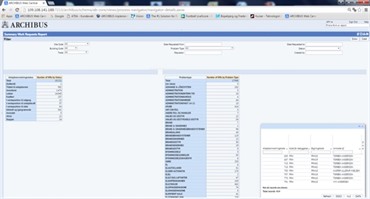
Before the installation of this system, most activities were managed using a different CAFM system that had some limits and was holding them back. Now with their ARCHIBUS system, it is much easier to see how many jobs are being done and the client receives information and updates automatically by email. The reports generated by the system are flexible and informative. The main reports generated are summary work request reports; being able to sort by trade and jobs gives a good understanding of performance.
Mass has been close at hand to support the system and this has proved both helpful and supportive to Preben. In some ways, the system interface didn’t meet with their expectations but MASS worked with them to achieve the desired result
 In all of the Facilities Management areas where the system has been applied, there have been noticeable improvements and it continues to improve.
The hospital is keen to get involved closer with Mass and ARCHIBUS and to join in with the User Group Meetings, as they fully appreciate that these meetings are the perfect place to exchange ideas and share problems and solutions, as well as the opportunity to tell their story and share their experience.
When asked what improvements he would like to see in the software, he commented that the user interface feels ‘old fashioned’ to him and that some buttons are small and the scroll bar is hidden at times – all quite simple things that, no doubt, will be addressed.
It is early in the implementation phase and so it is difficult to estimate benefits in terms of real operational savings, but already there appears to be a reduction in time taken and duplication; while accuracy seems to be much better.
“Things are more efficient so there is currently no intention to contract out facilities work, and we are focussed on driving more productivity through adopting the ARCHIBUS Technology across both sites.”
We are interested in finding more case studies to write about and so if you, or your organisation, have a success story to tell then simply contact us on 0118 977 8560 or email us at news@mass-plc.com
Alternatively, if you wish to discuss or have any questions regarding this case study, please reach out to us.
 Client – West Hertfordshire Hospital NHS Trust
Author – Joe Maleczek
College Facts and Figures –
- Over 23,000 students
- 1,500 staff
- More than £50 million turnover
- 5 campuses
- 1 business centre
- 1 Welsh language centre
- A Level pass rate of 97.7%
- 100% pass rate in 27 A Level subjects
- A vocational subject pass rate of 97%267 (34.7%)
- Extended Diploma students achieved triple Distinctions – the equivalent of 3 A grades at A Level
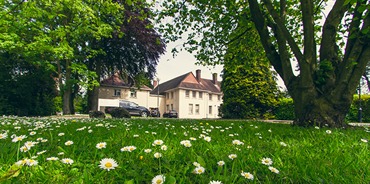
Driving along the M4 motorway to Wales and just over the Severn Bridge, you’ll come to the picturesque market town of Usk where the Coleg Gwent estates office is based within a beautiful agricultural setting, set amongst the rolling Welsh hills, truly a breath of fresh air. The fully operational farm set in the college’s 296-acre estate and is home to a 200 strong dairy herd, 250 sheep and a range of other farm animals. But the serenity of the environment belies a hive of activity managing a substantial and diverse portfolio of properties and land.
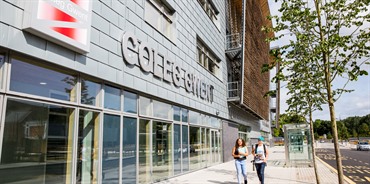
 The institution offers a very broad curriculum of academic and practical courses across its five un ique campuses located across the boroughs of Blaenau Gwent, Caerphilly, Monmouthshire, Newport and Torfaen – so there’s a whole world of exciting opportunity open to everyone in the local communities.
With over 170 buildings delivering in excess of 75,000 square metres of floor space to support the 1,000 staff in educating in excess of 23,000 students. This extensive and diverse environment is kept safe, secure and operational by the Estates and Facilities team where Alex Anderson and Janet Malkus can be found.
In recent years, Coleg Gwent has won Outstanding Estates Team at the annual TES Further Education Awards.
“It wasn’t just about new buildings – you could see the impact the team was having,” the judges said about Coleg Gwent
 The estate’s team can also boast award-winning management of health and safety, cutting-edge environmental management and strong partnerships with police, who provide dedicated community support officers for the college.
But what the team prides itself on its customer service, and the judges agreed. They loved the college’s innovative Get It Fixed system, which allows staff on all sites to easily report minor maintenance issues and get feedback on their progress. The judges praised the college’s attention to even the smallest of details.
ARCHIBUS has been used for many years to manage space and provide accurate statistics Government funding and has served them well, but they have recently transformed productivity by upgrading to the latest version of ARCHIBUS Web Central.
Alex knew the system could deliver more and set about defining what he wanted to achieve from it about eighteen months ago. Given the wide set of applications within the ARCHIBUS suite, Alex determined that the area where the best cost-benefit could be realised was by rigorous attention to delivering the best reactive Help Desk.
Only when he and his team had clearly mapped the workflows did they invite Mass to present their solution.
Mark Little at Mass, demonstrated what could be achieved with the ARCHIBUS system, and working with the team at Coleg Gwent it was concluded that an upgrade to the latest version of the application would realise the best efficiencies without compromising the effectiveness of the solution.
 That solution involved moving to the ARCHIBUS Web Central ‘On Demand’ application which was implemented b y December 2015, and already by using the new application, Alex and Janet can see more areas for enhancement and opportunities to improve.
Compared with many other educational institutions, budgets at Coleg Gwent are hard fought and every investment has to be fully justified in terms of cost/benefit and then fully exploited to return maximum Value For Money. Given these constraints, the ambitions of the estate’s office to deliver maximum effectiveness as perceived by their customers, the staff, students and suppliers are being realised through creative solutions supported by the commercial and technical staff at Mass.
Apart from Space Management and On Demand Help Desk, the team are actively developing their AutoCAD Revit and BIM capabilities to comply with Government directives on public buildings documentation, and are in consultation with other educational establishments that have implemented solutions using the comprehensive links between BIM / Revit and ARCHIBUS.
Paramount to the success of their system implementation was the ability to accurately measure the performance of craftspeople and assets used. The ARCHIBUS system is beginning to deliver exactly the information needed to facilitate truly accurate and informed property and facilities management decision making…in a more timely way than the reams of the spreadsheets, they had relied on in the past.
Critical to the maintenance of the five campuses are the caretakers at each site who have in the past been engaged to resolve any problems either by contact through email or in person by staff or students as they went about other tasks in the buildings.
The caretakers have access to three teams of professionals to address building fabric, mechanical and electrical issues.
The Buildings and Mechanical support are delivered either by the caretakers or through measured term contractors while the  Electrical engineering is delivered from an in-house service. One problem in measuring performance in the old email / catch them in the corridor system was the reliance on the caretakers’ memory and the rationalisation of the emails. One job may involve a ‘conversation’ over several emails to progress a solution, while two or more jobs could have been resolved with only one email and sign-off to show for it.
ARCHIBUS ‘On Demand’ now facilitates the clear job tracking of events and solutions by all of the caretakers.
Within the creative solution realised at Coleg Gwent, the caretakers are a ‘virtual help desk’ receiving, resolving, progressing and signing off work themselves so removing the staff intensive and potential bottleneck in a typical ‘X’ structured help desk-centric scenario. The shorter reporting and free flow lines between staff, caretakers and craftspeople are remotely supervised on the ARCHIBUS system by Janet to ensure cost efficiencies and effective remedies are realised across the different campuses to benefit Coleg Gwent as a whole.
To realise further efficiencies in delivering maintenance and facilities support service, it was clear that substantial gains could be made if the craftspeople and caretakers were equipped with a mobile ARCHIBUS solution. The implementation had to be carefully considered to minimise impact to some of the more tactile and somewhat ICT sceptical team members.
A suitable pilot environment was found by equipping the in-house electrical engineering team with a tablet solution. The Electrician opens work, logs parts waiting and other delays, and takes photographs to attach to the electronic ticket for safety and certification etc. and closes the job.
 The portability, flexibility and autonomy provided by the ability to log into the ARCHIBUS system remotely and to manage the complete process from trouble ticket to solution signoff were fully embraced and valuable statistics from this pilot will hopefully fuel adoption by the Buildings and Mechanical engineers.
Ultimately success in facilities management is measured by realising KPI’s (Key Performance Indicators) within ever more stringent SLA’s (Service Level Agreements) and ARCHIBUS is providing the control mechanism to make that happen.
Looking to the future Alex’s team has identified the following areas for development:
- Linking to the finance system, but the degree of granularity has to be considered in terms of cost /benefit before proceeding
- There are still spreadsheets that need to be absorbed into the ARCHIBUS system and it is an ongoing and gradual/measured process to ensure adoption and success
- They are finding that the more that goes into the system the greater the accuracy and the better the management of assets – as well as freeing up the FM team to develop future creative solutions
Every six weeks Alex meets with the directors of each of the campuses to discuss service delivery and customer satisfaction and the ARCHIBUS solution is increasingly providing the detail to drive the objectivity of the discussions.
The move to Web Central was a big one and only through careful planning and the dedication of the MASS Tech Support team, Mark Little in particular, did it work.
We are interested in finding more case studies to write about and so if you, or your organisation, have a success story to tell then simply contact us on 0118 977 8560 or email us at news@mass-plc.com
Alternatively, if you wish to discuss or have any questions regarding this case study, please reach out to us.